Alloy
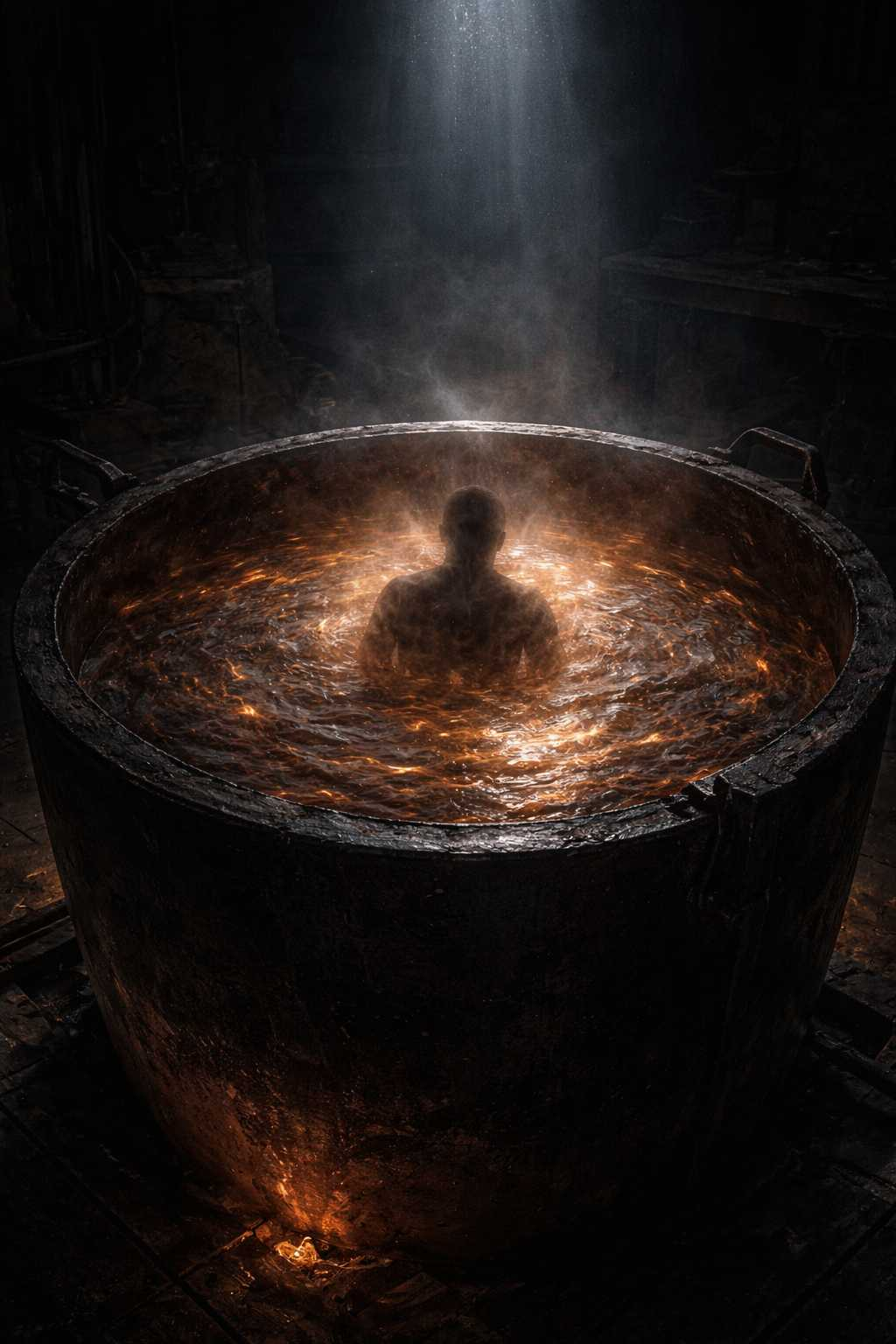
At the bottom of the crucible lies the human being.
Not as value, but as raw material.
Above it, weapons are poured:
organized fear, priced as security.
Then comes narcotics:
regulated escape, sold as relief.
These are not three problems.
They are one economy.
Money laundering is the flame that makes it palatable.
Corruption is the mold that gives it shape.
Funds that cannot endure light
are translated into procedures.
Guilt that cannot be carried
is distributed across committees.
When no one decides alone,
no one is responsible.
When everyone follows protocol,
no one is guilty.
Thus suffering becomes numbers.
Numbers become balance.
Balance becomes stability.
And stability is the only morality
the system understands.
No conspiracy is required.
Only incentives.
Reward for loyalty.
Punishment for deviation.
Silence as a career path.
Corruption is not the breaking of law.
It is when the law absorbs injustice
and calls it order.
That is why the small are taken.
That is why the structure is protected.
That is why control must increase
the more meaningless it becomes.
But alloys have a weakness:
they crack when cooled too quickly.
A human who sees clearly
and refuses the assigned role
disrupts the entire mixture.
Not with violence.
Not with shouting.
But with absence.
For a system built on flow
cannot survive stillness.
And when the heat drops,
and the crucible splits,
one thing remains at the bottom:
That which never allowed itself
to be melted.